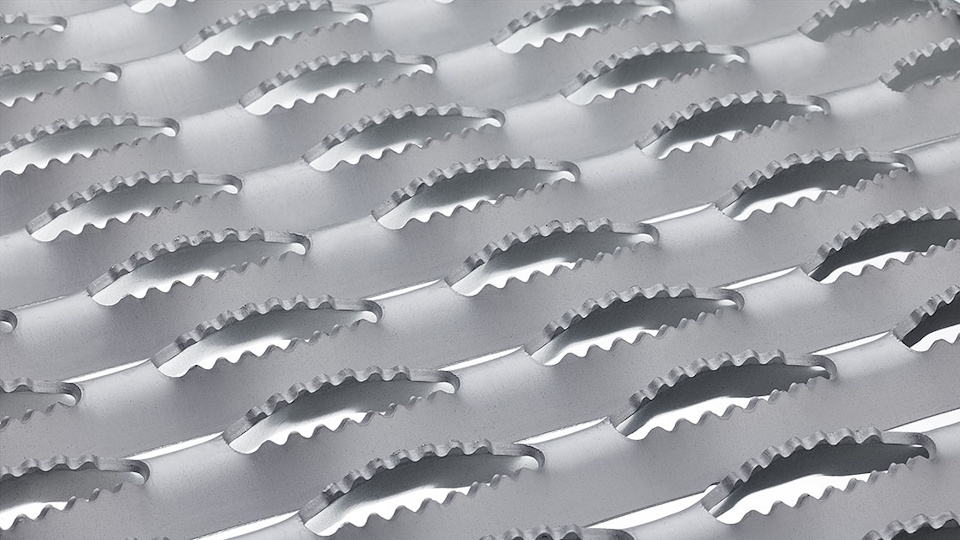
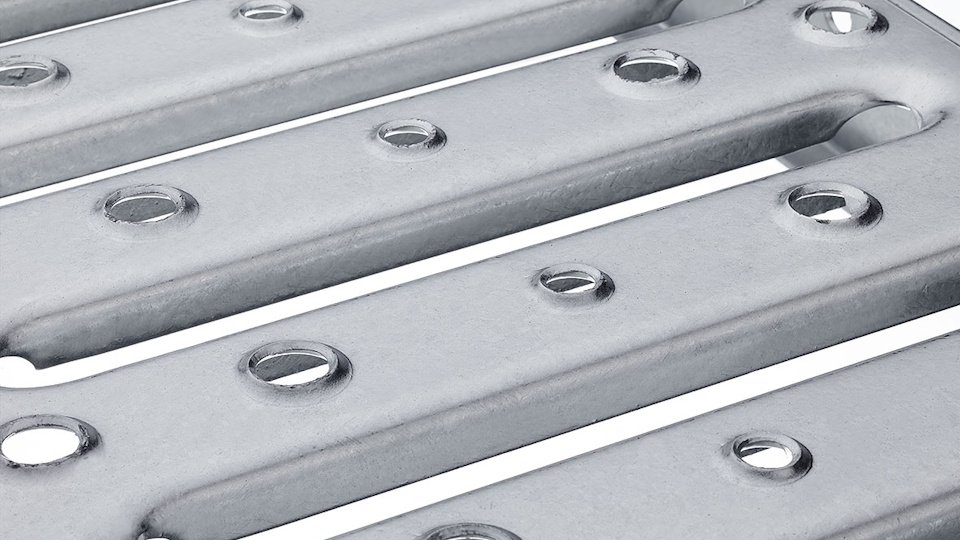
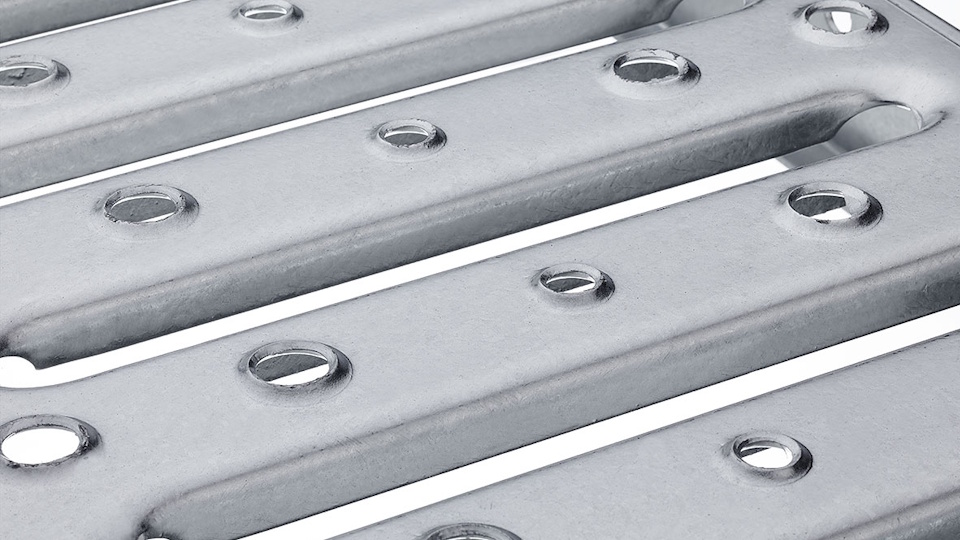
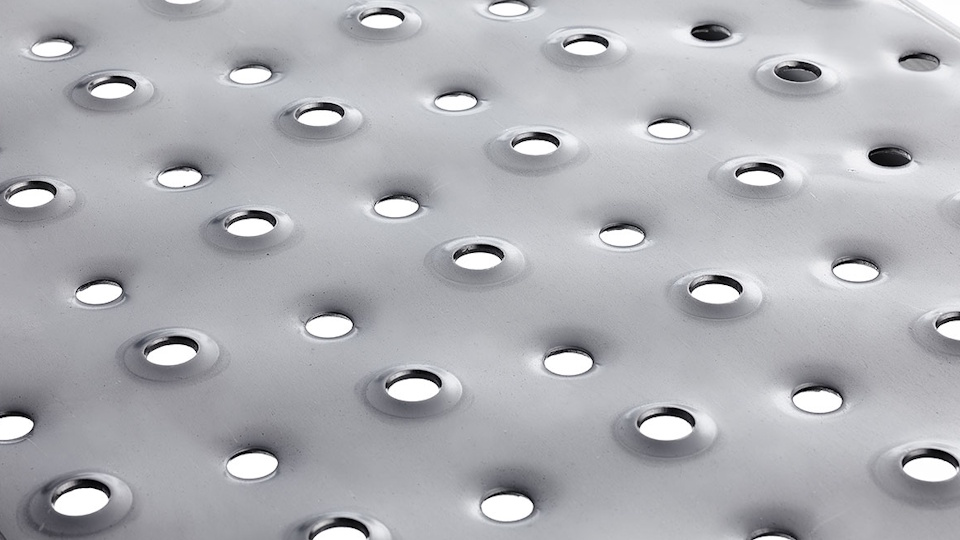
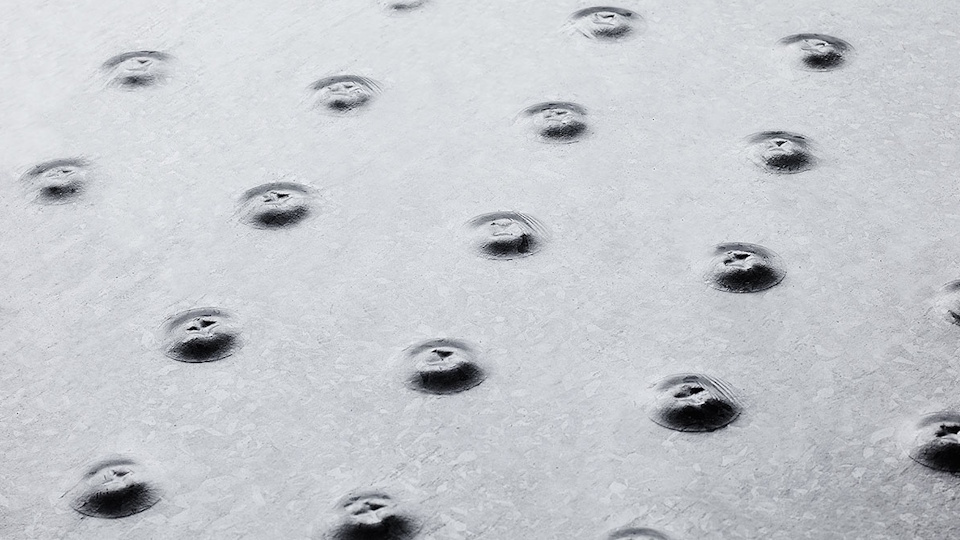
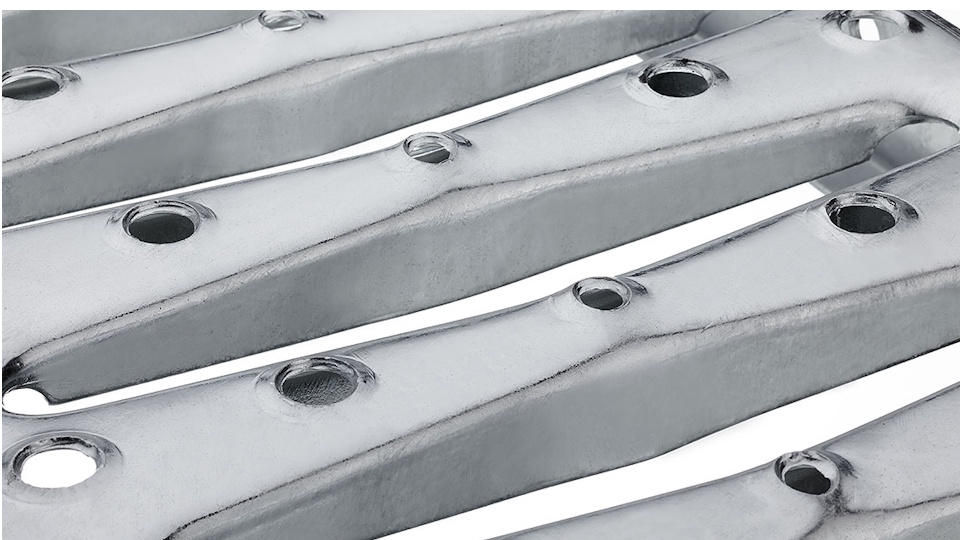
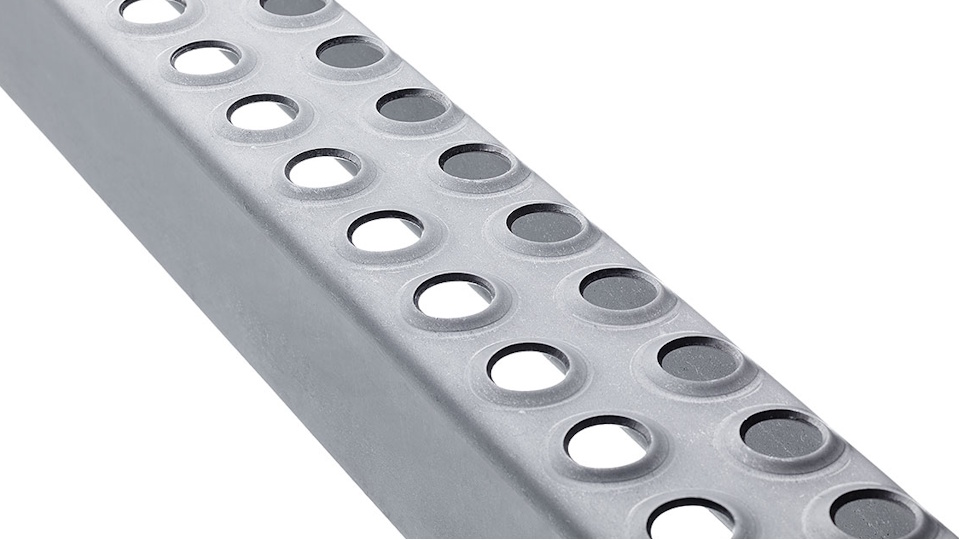
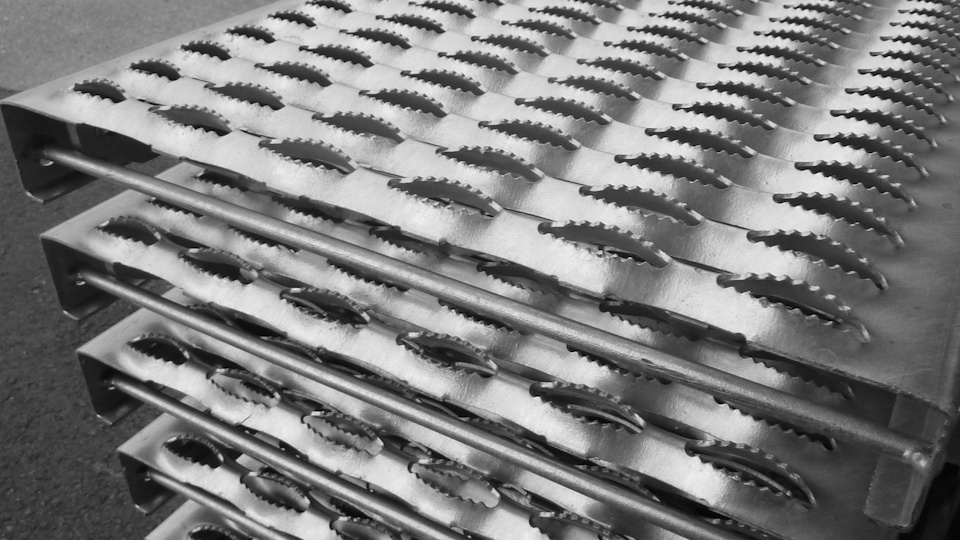
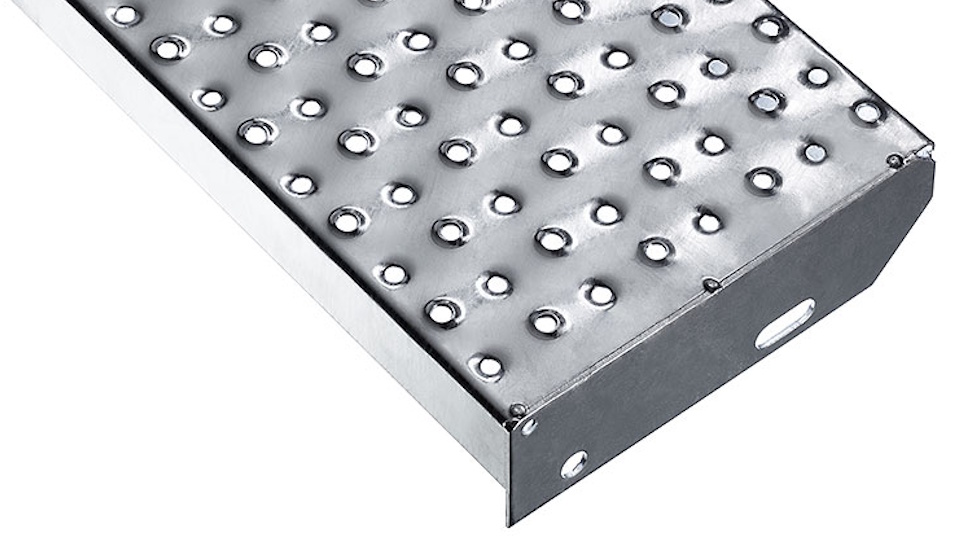
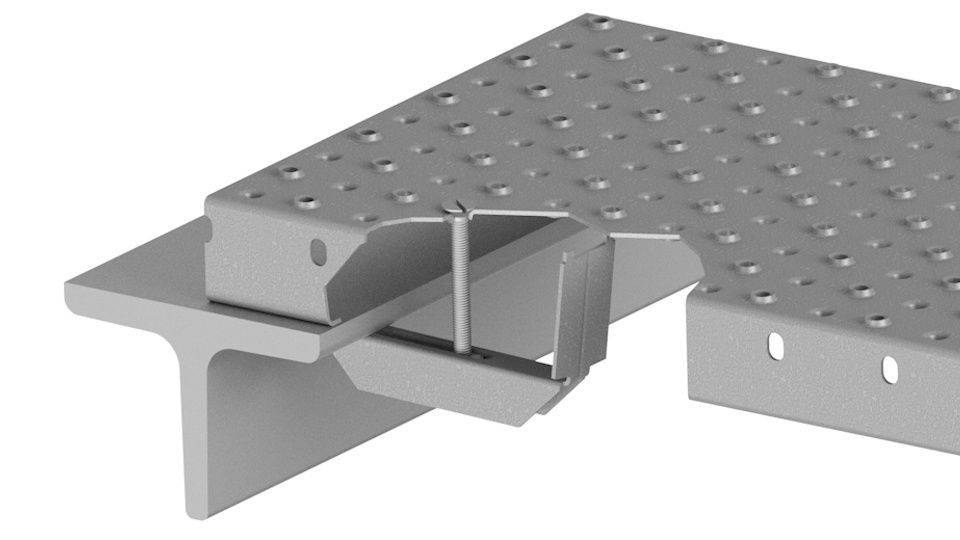
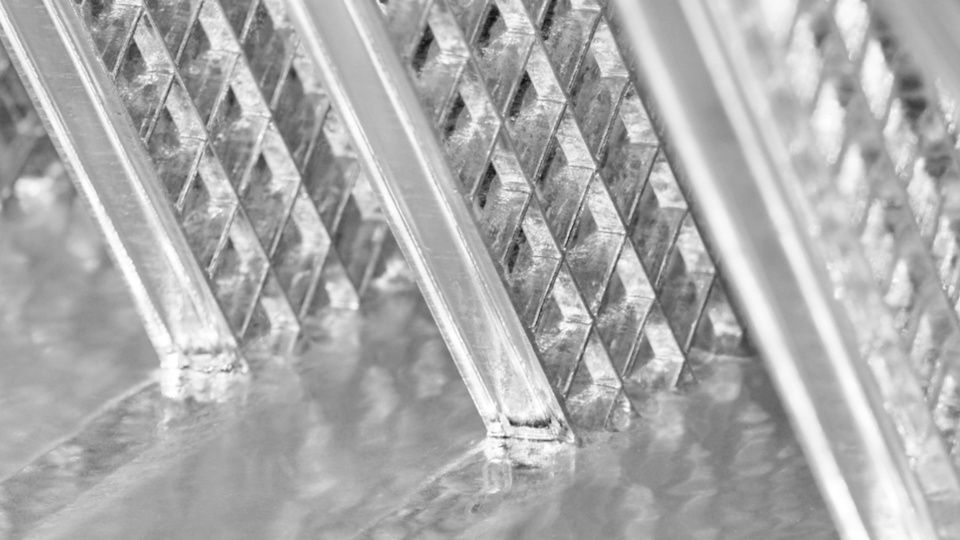
Sheet metal profiles are structural elements made of sheet metal with a C-shaped cross-section. They are advantageous especially due to their shape stability, anti-slip properties ensured by a special surface structure, and easy installation. Thanks to dimensional variability, large load spans and the possibility of custom-made supply, the use of sheet metal profiles reduces the costs of the supporting structure. Applications of sheet metal profiles include the construction of working and inspection platforms and walkways for industrial facilities as well as the transport and supply sectors.
- Sheet metal profiles are manufactured from material coils.
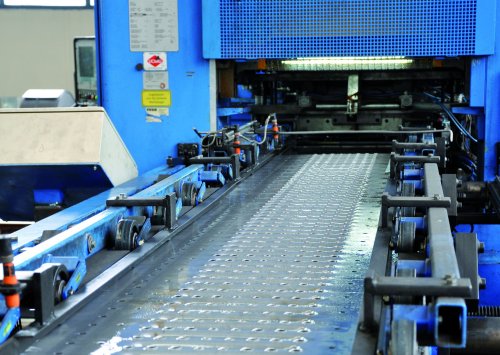
- After successful incoming inspection, the coils are transferred to the production line. Here, specific perforations are punched into the surface of the product using appropriate tools, and the perforated sheet is subsequently cut to length.
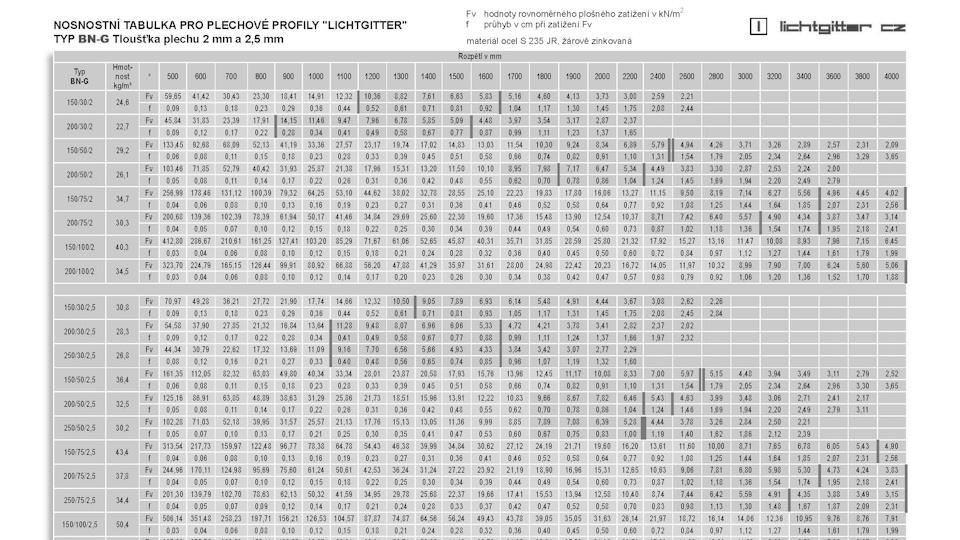
- When determining the length, the specified grid spacing “R” (see individual versions) should be observed as much as possible. Other lengths are of course possible but require higher production costs. The maximum production length is limited to 6000 mm for galvanized profiles. Based on the required load and material, the sheet thickness and the width of the sheet metal profile are determined.
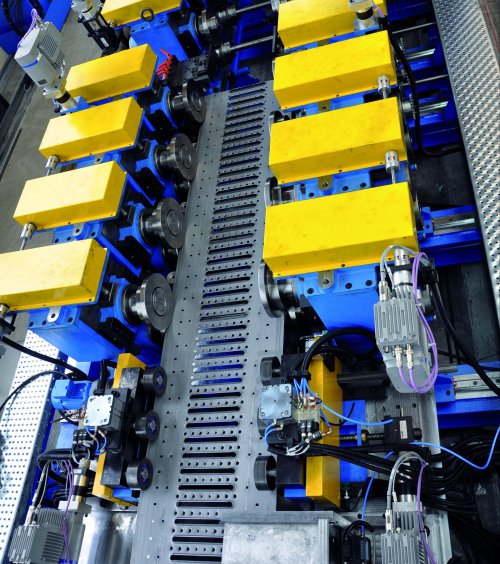
- The perforated sheets are bent into a C-profile using a CNC machine.
- Sheet metal profiles with shape modifications are generally edged with flat bars of the same height as the profile.
- Sheet metal profiles can also be supplied with a welded toe plate.
- Hot-dip galvanizing is carried out in accordance with EN ISO 1461